
Precision CNC Milling: Process Parameters, Accuracy and Industrial Uses
13.10.2026
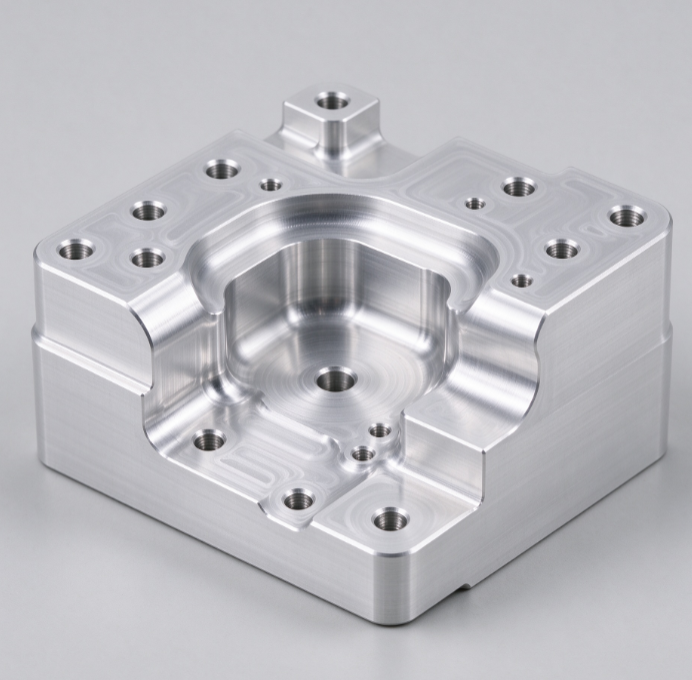
Table of Contents
1. Introduction
2. Core Accuracy Standards of Precision CNC Milling
3. Material Cutting Parameter Comparison Data
4. Key Benefits of Precision CNC Milling Services
5. Common Milling Tools and Process Types
6. Main Industrial Applications
7. Industry FAQs
Introduction
Precision CNC milling is a subtractive machining process. It uses computer-controlled rotary cutting tools to remove material from solid workpieces.
This process create custom parts with tight dimensional tolerances and smooth surface finishes. It different from standard CNC milling with loose accuracy ranges.
Modern precision CNC milling support complex 2D and 3D part geometries. It widely adopted in industries that require high consistency and low error rates for finished components.
Core Accuracy Standards of Precision CNC Milling
Accuracy is the core index that distinguish precision CNC milling from ordinary milling processing.
Dimensional and Positional Tolerance
Standard precision CNC milling holds dimensional tolerance between ±0.001mm and ±0.01mm. General ordinary milling only reach ±0.01mm to ±0.05mm.
Positioning repeatability of precision milling equipment can stay within ±0.002mm. It ensures batch parts have almost identical size and position.
Surface Finish Performance
Qualified precision milled parts achieve Ra 0.8μm smoothness under optimized parameters. No secondary polishing needed for most assembly scenarios.
Poor parameter setting will raise surface roughness and leave obvious tool marks on workpiece surface.
Material Cutting Parameter Comparison Data
Different metal materials need matched spindle speed and feed rate. Wrong parameters reduce accuracy and shorten tool service life. The table below shows verified industrial precision milling parameters.
Workpiece Material | Spindle Speed (RPM) | Feed Rate (mm/min) | Single Cutting Depth (mm) | Surface Roughness (Ra) |
6061 Aluminum Alloy | 3500-6000 | 150-250 | 0.30-0.80 | 0.8μm-1.6μm |
Carbon Steel | 1800-3000 | 80-150 | 0.20-0.50 | 1.6μm-3.2μm |
Stainless Steel 304 | 1200-2000 | 50-100 | 0.10-0.30 | 1.6μm-3.2μm |
Magnesium Alloy AZ91D | 4000-7000 | 120-200 | 0.25-0.60 | 0.8μm-1.6μm |
Harder materials require lower spindle speed and slower feed rate. High speed will cause tool vibration and dimensional deviation.
Test data shows excessive cutting speed can raise part deviation by over 50% for alloy materials. Strict parameter control is necessary for precision production.
Key Benefits of Precision CNC Milling Services
High Batch Consistency
Computer programmed machining eliminate manual operation errors. Hundreds of batch parts keep unified tolerance standard.
It avoid size difference that common manual machining always produce.
Complex Geometry Machining Capacity
Precision CNC milling machines support multi-axis linkage movement. It process irregular curves, grooves and hole arrays accurately.
These complex structures cannot be finished by ordinary mechanical processing methods.
Low Post-Processing Cost
High-precision milling output smooth and accurate parts. Most products do not need extra grinding or polishing.
It save extra labor and time cost for secondary processing.
Common Milling Tools and Process Types
Carbide End Mill Tools
Most precision CNC milling projects use carbide end mills. The tool hardness resist high-speed wear and deformation.
It fit high-precision finishing and long-time continuous machining work.
Roughing and Finishing Milling
Roughing milling remove most redundant material fast. It reserve small margin for finishing process.
Finishing milling focus on accuracy and surface quality. It reach final dimensional standard of parts.
Main Industrial Applications
Precision CNC milling widely serve high-end manufacturing fields.
Aerospace industry use it for lightweight alloy structural parts. Strict tolerance ensure flight equipment stability and safety.
Medical device manufacturing adopt precision milled components. High surface accuracy prevent tissue friction and contamination risks.
Electronic precision parts and automotive sensor components all rely on this process. It support miniaturized and high-precision assembly demands.
Mold manufacturing industry uses precision CNC milling to process mold cores and cavities. It improve mold forming accuracy for mass production.
Industry FAQs
1. What tolerance can precision CNC milling achieve?
Standard precision CNC milling tolerance range from ±0.001mm to ±0.01mm. Ultra-precision processing can reach tolerance below ±0.001mm for special industrial parts.
2. What tool is the best choice for precision aluminum milling?
Carbide end mills are the most suitable tools. Matching spindle speed 3500-6000 RPM can get optimal surface finish and tool life.
3. Why high cutting speed reduce precision milling accuracy?
High speed generate excessive cutting heat and tool vibration. It cause material thermal deformation and size deviation, deviation rate can exceed 50% on alloy materials.
4. What is the difference between rough milling and finish milling?
Rough milling removes bulk material fast with low accuracy. Finish milling focuses on dimensional tolerance and surface smoothness to meet final part standards.